
50 Incredible Facts About Puffins
50 Incredible Facts About Atlantic Puffins The Ultimate Guide
Introduction
The Atlantic Puffin (Fratercula arctica) is perhaps the most beloved bird in the northern hemisphere. Often called the "Sea Parrot" or "Clown of the Sea," these charismatic birds draw hundreds of thousands of visitors to Iceland every year. But there is much more to the puffin than just a colorful beak and a tuxedo-like suit.
From their incredible diving abilities to their long-distance migrations, puffins are marvels of biological engineering. At Puffin Adventures, we spend our summers surrounded by these "prófastar" (as we call them in Icelandic). To celebrate these amazing neighbors, we’ve compiled the ultimate list of 50 fun, weird, and wonderful facts about the Atlantic Puffin.
Biological Marvels & Appearance
- The "Changeable" Beak: The puffin’s bright orange beak isn't permanent. It only turns bright during the spring breeding season. In winter, they shed the colorful outer plates, and their beaks become smaller and dull grey.
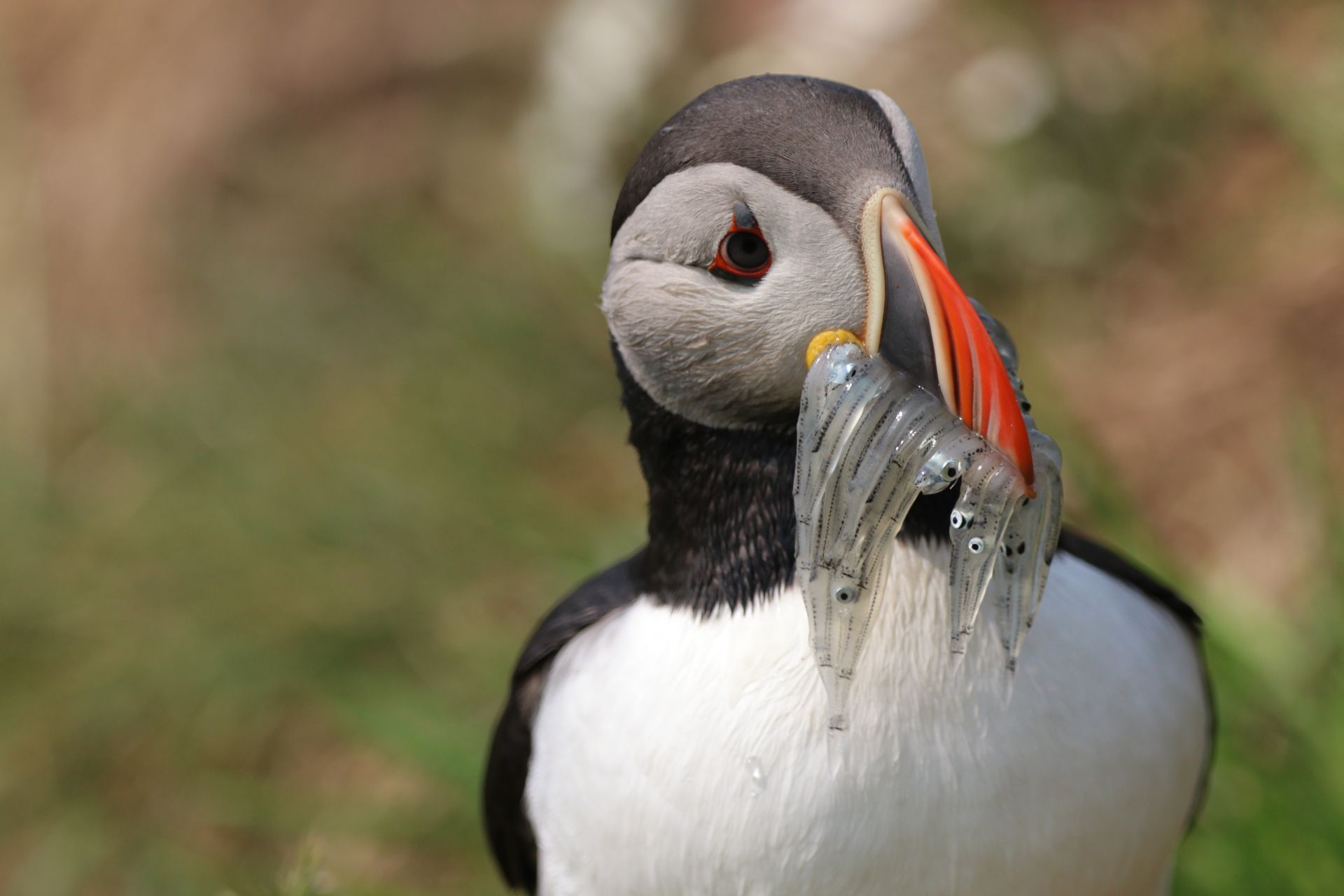
- Built-in Spikes: A puffin’s mouth is lined with backward-pointing spines (denticles) on its upper palate. This allows them to hold a dozen fish in their mouth while still opening it to catch more.
- The "Clown" Eyes: Their famous eye markings are actually plates of keratin that are also shed after the breeding season.
- Waterproof Suits: Puffins have a special gland near their tail that produces oil. They spread this over their feathers to stay waterproof and buoyant in the freezing Atlantic.
- They Aren't Large: Most people are surprised to find puffins are only about 25–30 cm tall, roughly the size of a standard ruler.
- Wing Speed: To stay airborne, a puffin must flap its wings up to 400 times per minute.
- The "Tuxedo" Camouflage: This coloring is called "countershading." From above, their black back blends with the dark ocean; from below, their white belly blends with the bright sky.
- Heavy Bones: Unlike many birds, puffins have relatively heavy bones, which helps them dive deep into the water.
Master Divers & Hunters
- Deep Sea Divers: While they usually feed in the top 10 meters, puffins have been recorded diving to depths of 60 meters (200 feet).
- Underwater Flight: Puffins don’t use their feet to swim; they use their wings to "fly" through the water, using their webbed feet only as a rudder.
- The Sand Eel Diet: Their favorite meal is the sand eel, but they also eat capelin, herring, and hake.
- The Record Holder: The record for the most fish held in a single puffin's beak at once is 62 fish!
- Hydration: Puffins don’t need fresh water. They drink salt water and excrete the excess salt through special glands above their eyes.
- Efficiency: A puffin can catch up to 10 fish per dive to bring back to its chick.
Love, Marriage & Family Life
- Life-Long Partners: Puffins are generally monogamous and return to the same partner year after year.
- Billing: Instead of singing, puffins show affection by "billing", rubbing their beaks together. It’s the puffin version of a kiss.
- One Egg Only: A puffin pair only lays one single egg per year. This makes every chick (puffling) extremely precious.
- Burrow Builders: Puffins don't build nests of sticks. They use their beaks and sharp claws to dig burrows in the soil, often 1–2 meters deep.
- The Puffling: A baby puffin is called a puffling.
- Night-time Departures: To avoid predators like gulls, pufflings usually leave their burrows and head to sea for the first time under the cover of darkness.
- No Parenting at Sea: Once the puffling leaves the nest, it is 100% on its own. The parents do not teach it how to fish or fly at sea.
- Long Childhood: A puffling will stay at sea for
2 to 3 years without ever touching land before it returns to its colony.
The Life Cycle & Longevity
- Impressive Lifespan: Puffins typically live for 20–25 years.
- The Oldest Puffin: The oldest recorded Atlantic Puffin lived to be 38 years old.
- Delayed Maturity: They don't start breeding until they are 4 to 6 years old.
- Winter Nomads: During the winter, puffins are completely solitary. They spread out across the Atlantic, some reaching as far south as the Mediterranean or the coast of Africa.
- Home Sweet Home: Puffins are "philopatric," meaning they almost always return to the exact same burrow where they were born to start their own family.
Puffin Behavior & Social Life
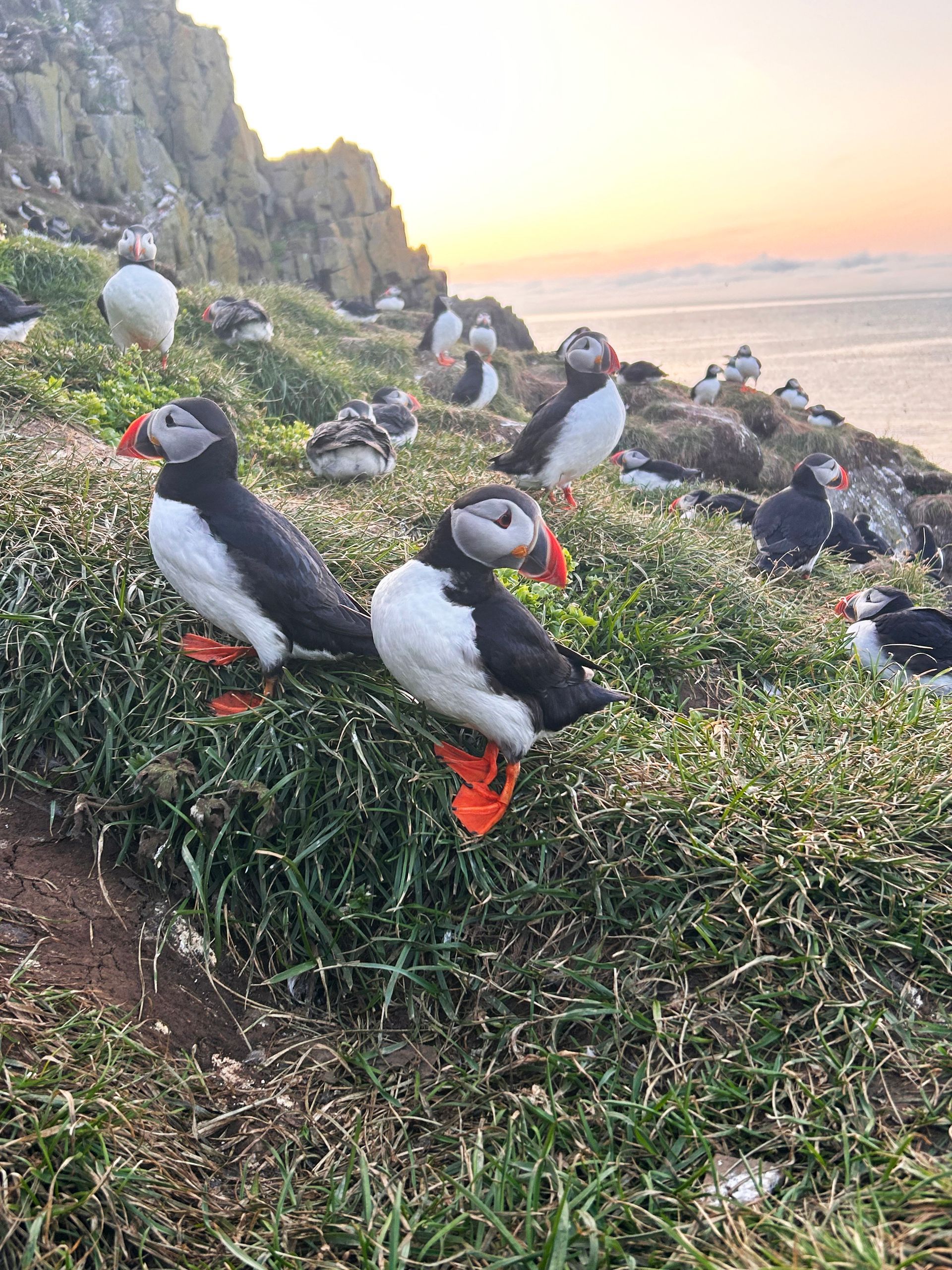
- The "Loafing" Area: Colonies have specific rocks or grassy patches called "loafing areas" where puffins just hang out and socialize.
- The Chainsaw Growl: Puffins don't chirp; they make a low, guttural sound that sounds a bit like a muffled chainsaw or a cow's "moo."
- Body Language: A puffin walking with its head down is showing submission. A puffin guarding its burrow will puff up its chest and gape its beak to show dominance.
- Rafting: You will often see hundreds of puffins floating together on the ocean surface. This is called "rafting."
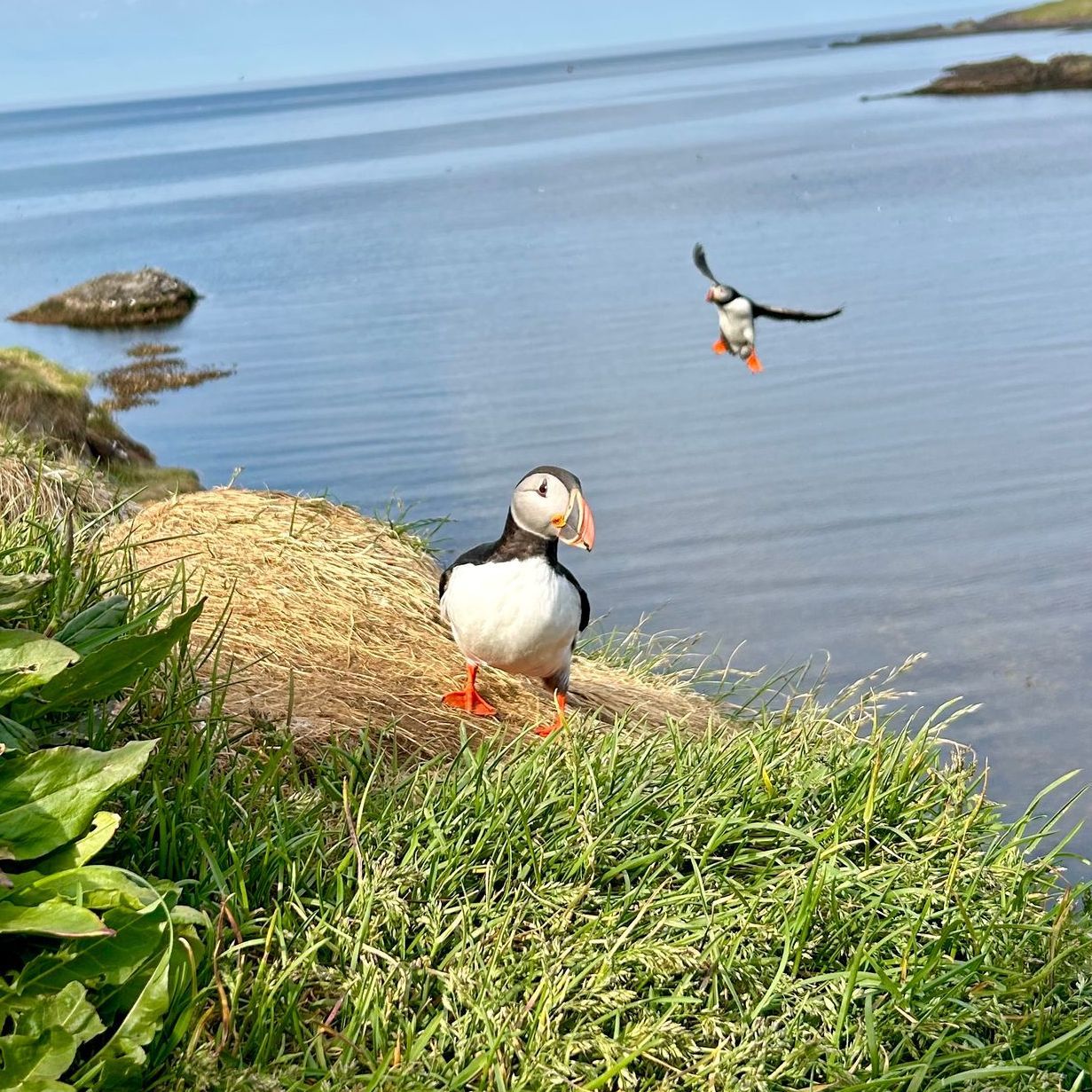
- Landing is Hard: Puffins are great flyers and divers, but they are terrible at landing. They often crash-land into the grass or tumble over their neighbors.
Puffins in Iceland & Borgarfjörður Eystri
- The World's Hub: Iceland is home to roughly 60% of the world's Atlantic Puffin population.
- Puffin Capital: Borgarfjörður Eystri is home to roughly 10,000 pairs of puffins every summer.
- The Marina Advantage: Hafnarhólmi in Borgarfjörður Eystri is one of the few places in the world where you can see puffins at eye level from safe wooden platforms.
- The Arrival: Puffins usually arrive in Iceland in mid-April, we keep a record of their arrivals on our info site.
- The Departure: By mid-August, the puffins leave the cliffs almost overnight to return to the open ocean.
- The Puffin Watch: Locals in Borgarfjörður Eystri take great pride in the first puffin sighting of the year, it’s the official sign of spring.
- Safety in Numbers: Puffins nest in large colonies to confuse predators like Great Black-backed Gulls.
Fun & Random Trivia
- Nicknames: In the UK, they are called "Sea Parrots." In Iceland, we call them "Lundi."
- Puffin Stamps: The puffin has appeared on more Icelandic stamps and postcards than any other animal.
- They Aren't Penguins: Though they look similar due to their black and white color, puffins and penguins are not related. Puffins can fly; penguins cannot.
- Speedy Flyers: In level flight, a puffin can reach speeds of 88 km/h (55 mph).
- Tool Users: Researchers recently filmed a puffin using a small stick to scratch its back, the first time a seabird has been seen using a tool.
- Burrow Neighbors: Puffins sometimes share their colonies with rabbits or Manx Shearwaters, occasionally "borrowing" burrows from other species.
- Global Population: There are estimated to be about 6 to 8 million Atlantic Puffins in the world.
- Atlantic Only: There are four species of puffins, but the Atlantic Puffin is the only one that lives in the Atlantic Ocean.
- Egg Camouflage: Puffin eggs are white but quickly become stained brown by the soil in the burrow, which helps hide them from predators.
- Puffin Sightings: On a Puffin Adventures Nature & Wildlife tour, you don't just see one puffin; you often see thousands surrounding the boat.
- Conservation: The Atlantic Puffin is currently listed as "Vulnerable." Protecting their nesting sites, like Hafnarhólmi, is vital for their survival.
Conclusion
The more you learn about the Atlantic Puffin, the more you realize how special these birds truly are. They are survivors, world travelers, and dedicated parents.
Want to see these 50 facts come to life? There is no better place in the world than the Eastfjords of Iceland. Join us at Puffin Adventures for a Nature & Wildlife RIB Safari tour where we can show you these incredible birds in their natural habitat.